Animals that react to your choices. Weapons that attract attention. Wounds you cannot forget with one click. This is the detailed design for survival in VEXHOLD.
Planned
The game is still being built. This plan describes future systems and the intended visual direction; it is not a playable demo.
18Animal species
7Tameable species
32Base weapons
8Medical supplies
01 / Living world
A world with its own instincts.
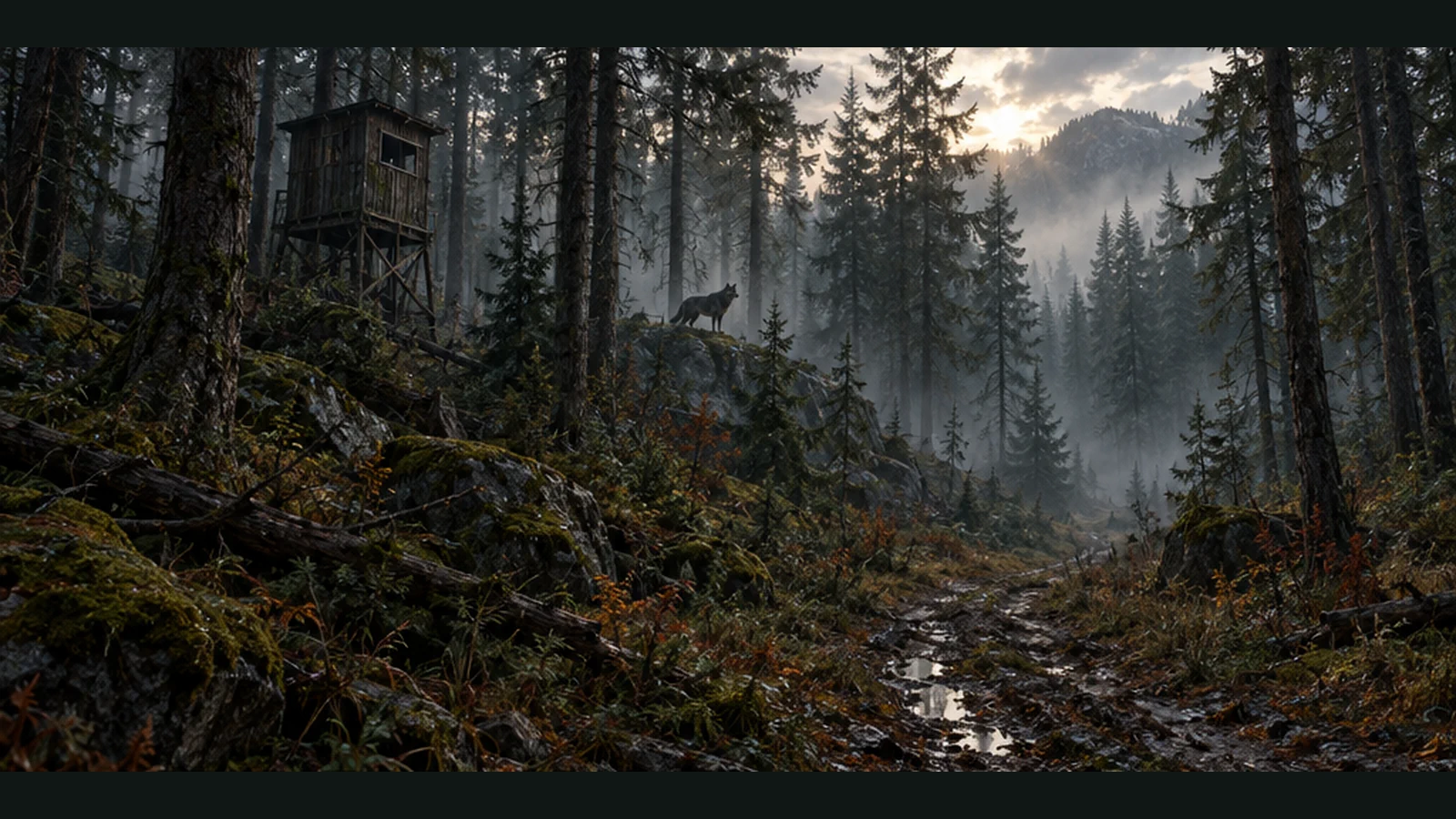
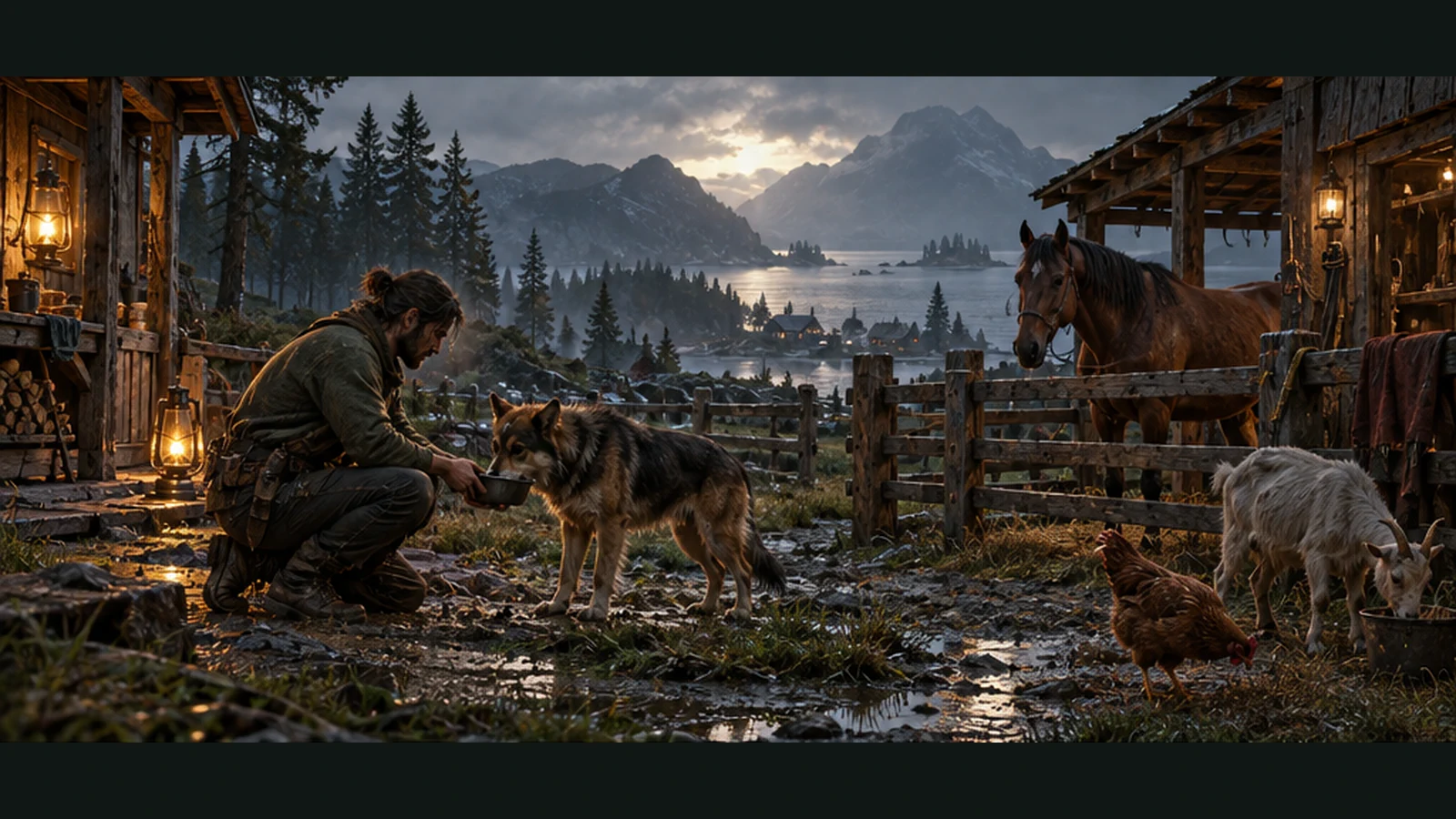
Hunt, track and care. Every species has a role, diet and behaviour. An infected animal is a variant of that species, not an extra number in the count.
Pre-render concept of the planned game · not a gameplay image
Wildlife6 species
WolfWildlife
Predator of forests and mountains.
Food
Meat
Behaviour
Hunts in packs; noise, blood trails and the season shape its route.
BearWildlife
Rare territorial threat around forests and mountains.
Food
Berries, fish and meat
Behaviour
Avoids busy areas but defends food and shelter.
DeerWildlife
Prey animal for meat and leather.
Food
Grass and leaves
Behaviour
Flees voices and gunfire; leaves tracks in mud and snow.
BoarWildlife
Hardy food source near forest edges.
Food
Roots, berries and food scraps
Behaviour
Seeks cover and may charge when cornered.
FoxWildlife
Small scavenger and a sign of nearby prey.
Food
Small prey and berries
Behaviour
Steals unattended food and disappears at loud noises.
RatWildlife
Pest around waste, stores and abandoned buildings.
Food
Food scraps and grain
Behaviour
Drawn to poorly sealed supplies; cats help keep numbers down.
Companions4 species
DogTaming planned
Guards the base and warns of intruders.
Food
Meat and dried meat
Behaviour
Feeding builds trust; can follow, stay and return.
CatTaming planned
Catches rats and warns of zombies.
Food
Fish
Behaviour
Explores around the base on its own and hisses at nearby danger.
HorseTaming planned
Transport with a third-person camera and saddlebags.
Food
Apples, carrots and hay
Behaviour
Needs rest and water; may panic at gunfire and hordes.
RabbitTaming planned
Small animal that is easy to tame.
Food
Lettuce and carrots
Behaviour
Stays near safe shelter and flees predators.
Farm animals5 species
ChickenTaming planned
Eggs when properly cared for.
Food
Grain
Behaviour
Forages by day and returns to its coop for the night.
GoatTaming planned
Milk and access to steep grazing land.
Food
Hay
Behaviour
Climbs obstacles; a poorly secured pen is no guarantee.
PigTaming planned
Sniffs out food near the base.
Food
Vegetable scraps
Behaviour
Responds to food smells and needs space and care.
CowFarm animals
Abandoned livestock; later expanded into animal husbandry.
Food
Grass and hay
Behaviour
Moves in small groups around farms; full husbandry comes later.
SheepFarm animals
Abandoned livestock; a later source of wool.
Food
Grass and hay
Behaviour
Seeks its flock and flees together; shearing belongs to later husbandry.
Fish3 species
PerchFish
Food from rivers and lakes.
Food
Small aquatic animals
Behaviour
Catch chances depend on the water, time of day and season.
PikeFish
Large predator fish in inland waters.
Food
Fish
Behaviour
Lives in deeper water; rarer than perch.
SalmonFish
Food along coasts and river mouths.
Food
Small aquatic animals
Behaviour
Seasonal routes make a permanent fishing spot unreliable.
Trust has to be earned.
The plan lists 18 real species in four groups. Infected variants do not count as extra species; species and counts may change during development.
The first trust loop covers dogs, cats, horses, chickens, goats, pigs and rabbits. Favourite food, repeated care and safe behaviour build trust; not a single click.
Food, water, dry shelter and protection remain necessary after taming. Neglect lowers trust and performance.
Noise, scent, time of day and season shape routes and reactions. Predators stay wild; milk, eggs and transport require care.
Animals can be wounded or infected and die permanently. The server tracks animal status and ownership; pets do not automatically return.
Cows and sheep begin as abandoned livestock. Full husbandry, wool and breeding are later expansions, beyond the first seven tameable species.
Meet Scout
Trust starts with a small choice.
Pet Scout, give him food and water, play together and let him rest. Discover how care changes his trust and behaviour.
Interactive web prototype · not gameplay
01 / SCOUTCurious
Tap Scout to pet him
Scout looks at you curiously. Give him a gentle introduction.
Trust20 / 100
Food45 / 100
Water55 / 100
Energy70 / 100
Stress20 / 100
Your supplies
3 food portions
3 water portions
A sudden noise shows how a wary or bonded dog responds.
Scout waits for you. The prototype pauses when out of view.
This is a small browser prototype of the planned animal system. Its care rules and responses are recorded in the game plan for the future game; this is not footage from the engine.
02 / Equipment and combat
Choose your weapon. Carry the consequences.
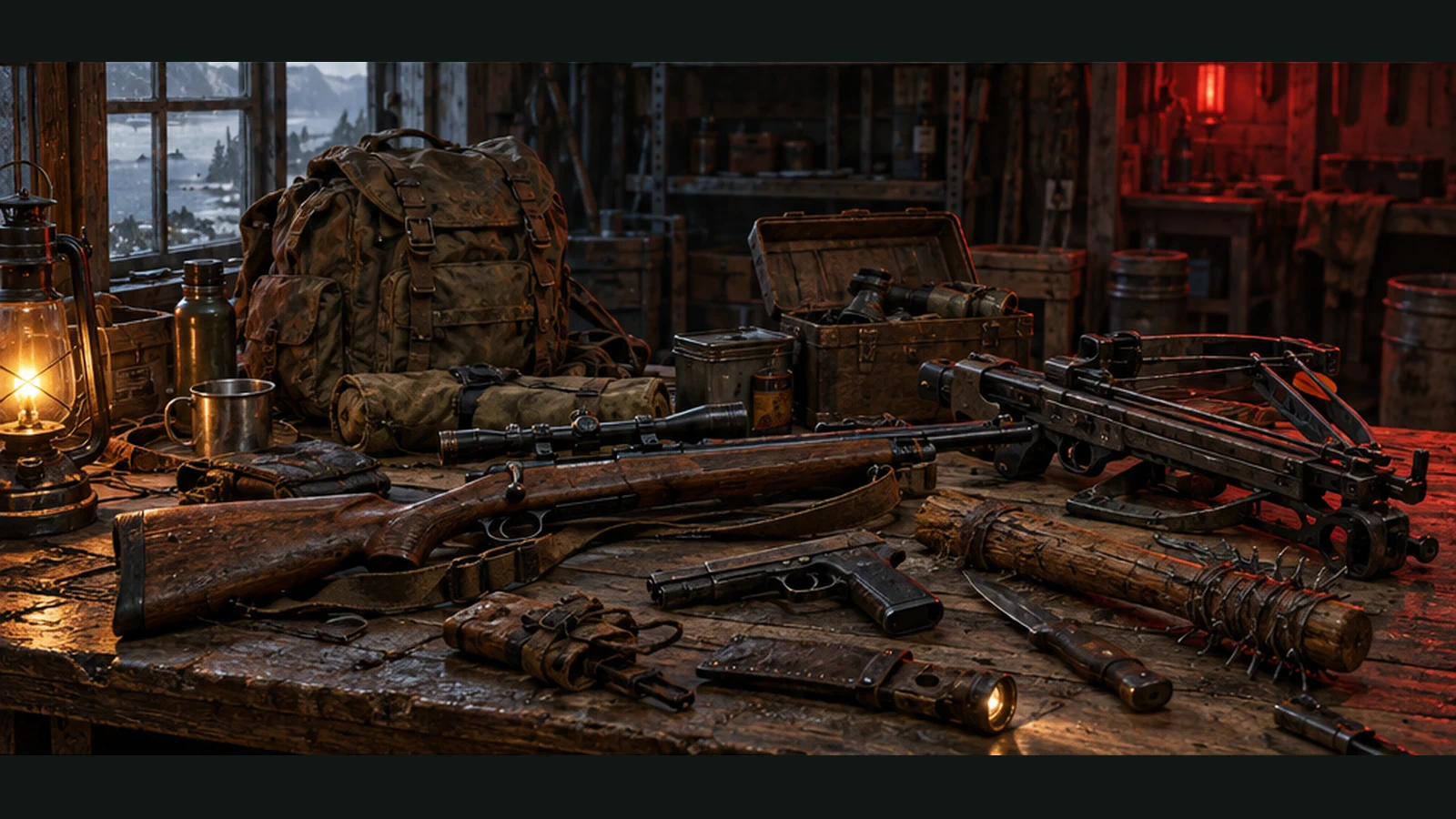
The arsenal runs from improvised tools to rare military weapons. The counts below cover base weapons; skins, colours and attachments are not counted twice.
Pre-render concept of the planned game · not a gameplay image
0110
Melee weapons
Ten quiet choices for the first days; reach, stamina and wear shape the trade-off.
Wooden club
Reinforced baseball bat
Crowbar
Hatchet
Fire axe
Machete
Hunting knife
Sledgehammer
Scrap spear
Riot baton
024
Primitive ranged weapons
Four alternatives to firearms; less noise at the cost of slower shots and recovering projectiles.
Sling
Wooden bow
Recurve bow
Crossbow
035
Handguns
Five compact firearms; easy to carry, but ammunition and parts remain scarce.
Scrap pistol
Compact pistol
Service pistol
Revolver
Heavy pistol
044
Shotguns
Four close-range choices; powerful, loud and dependent on supplies and reloads.
Single-shot shotgun
Double-barrel shotgun
Pump-action shotgun
Semi-automatic shotgun
059
Long guns
Nine weapons from hunting gear to military loot; weight, noise and upkeep limit the advantage.
Hunting rifle
Lever-action rifle
Bolt-action rifle
Carbine
Scout rifle
Submachine gun
Assault rifle
Marksman rifle
Light machine gun
More than damage per second.
Target: 32 base weapons in five categories. Skins, attachments and quality variants are not extra base weapons; this list is a development plan.
Primitive gear starts with gathering and crafting. Better weapons require blueprints, suitable workbenches and rare loot.
Ammunition, weight, condition and noise shape the economy. Firearms draw zombies and may reveal your position.
Use, rain and poor upkeep cause wear and rust. Repairs cost parts; a better weapon never stays a free advantage.
Attachments modify an existing weapon. Raiding explosives and future vehicle weapons are outside this count.
The server validates damage, distance, fire rate, ammunition and condition. Final statistics follow playtests, with no paid combat advantages.
03 / Wound and bandage system
Survival does not stop after the fight.
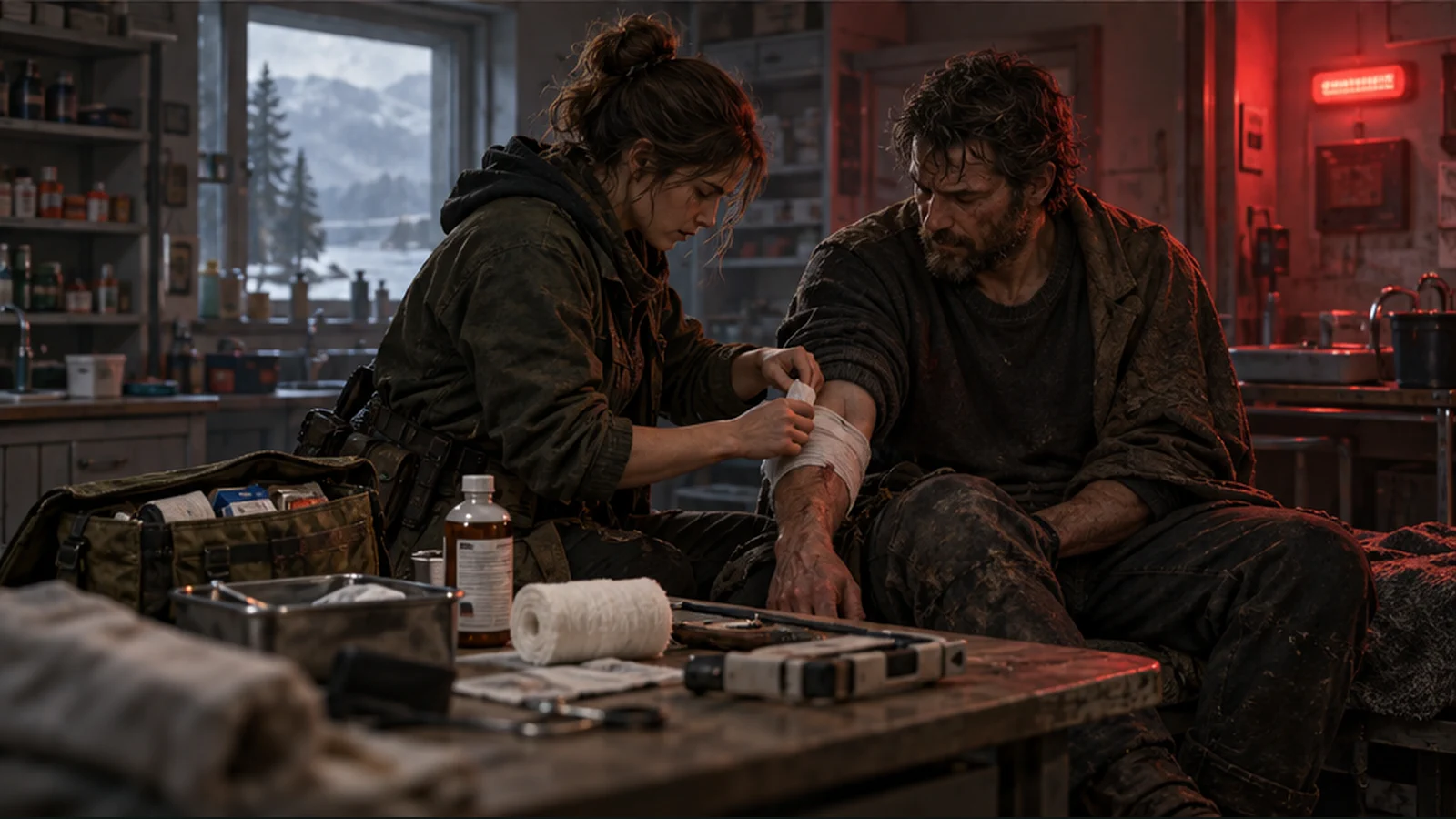
Stopping bleeding and fully recovering are different steps. The design connects wound location, blood loss, contamination and care.
Pre-render concept of the planned game · not a gameplay image
01
Read the wound
The wound screen separates head, torso, arms and legs, with light, heavy or critical bleeding. Scratches, deep cuts, bites and fractures need different supplies.
02
Find cover
Treatment occupies your hands. A planned short action takes 4–6 game seconds; a complex one takes 8–12. Sprinting, using a weapon or taking damage interrupts it; the wound remains.
03
Limit blood loss
Clean bandages help with light bleeding; pressure dressings help with heavier bleeding. A tourniquet is only a temporary game option for a critical arm or leg wound and adds a movement penalty until follow-up treatment.
04
Choose follow-up care
Dirty or wet dressings raise the contamination meter. A cleaning kit and fresh clean dressing lower that risk. An improvised cloth can buy time but never counts as sterile treatment.
05
Stabilize the injury
A splint supports a fractured arm or leg and reduces the movement penalty; the bone is not healed. Painkillers temporarily dull pain signals without fixing bleeding, damage or infection.
06
Recovery takes time
Bandages do not instantly restore full health. Dry clothing, food, water and rest support gradual recovery. Water, dirt and new damage wear dressings out; the wound screen warns when replacement is needed.
07
Help someone else
Teammates can inspect the same wound status and target treatment when the other player allows help. The helper uses their own supplies and stays exposed. Server validation decides completed treatment and item consumption.
What goes in your medical bag?
Improvised cloth
Temporary help for light bleeding; dirty material raises contamination risk.
Clean bandage
Covers a light wound and helps limit blood loss; does not restore lost health.
Pressure dressing
Stronger game option for heavy bleeding; takes more time and material.
Cleaning kit
Lowers wound contamination; does not protect against the zombie infection.
Splint
Reduces a fracture movement penalty while recovery continues.
Tourniquet
Temporary game option for critical bleeding in an arm or leg, with a lasting penalty until follow-up care.
Painkillers
Temporary pain reduction; underlying damage and blood loss remain.
Infection medication
Targeted loot for infection treatment; ordinary dressings do not stop the zombie infection.
Recovery takes time and protection.
Each body zone has its own wound status; blood loss, pain, contamination and fractures are separate values. Several wounds may need treatment at once.
All listed timings are provisional game balance values. Interrupting consumes started material but gives no completed treatment; this prevents free healing.
Wound contamination, lung infection and zombie infection remain separate systems. The right infection medication is scarce; bandages cannot replace it.
The medical design belongs to phase 6, step 23; animals to phase 9, step 32 and combat to phase 6, step 24. These systems are planned and not playable yet.
Wound status persists through logout; the server simulates recovery only when the world allows it. Quickly logging back in does not heal injuries.
Follow what is actually complete on the roadmap. We build survival, combat and animal systems in their own development phases.